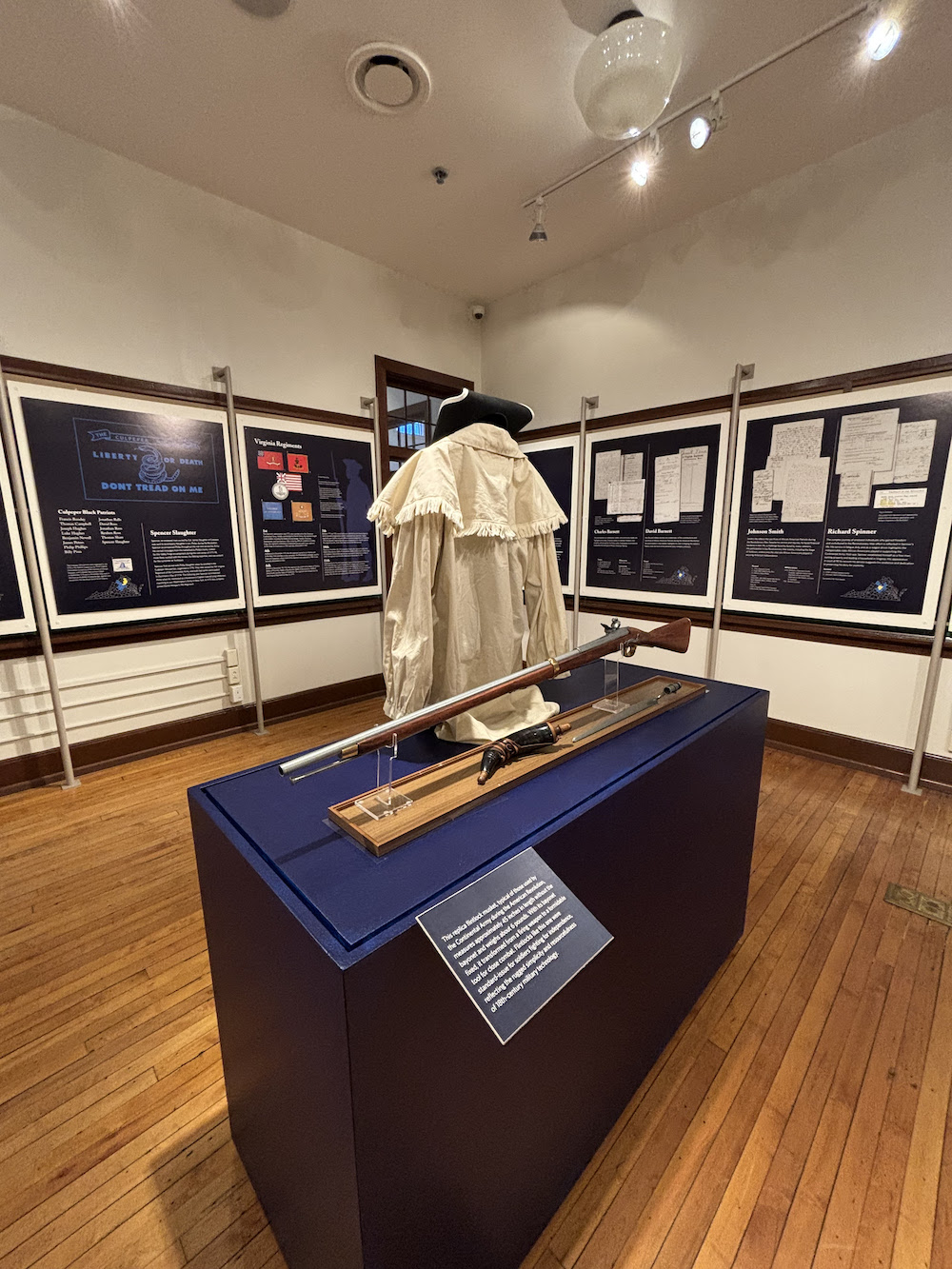
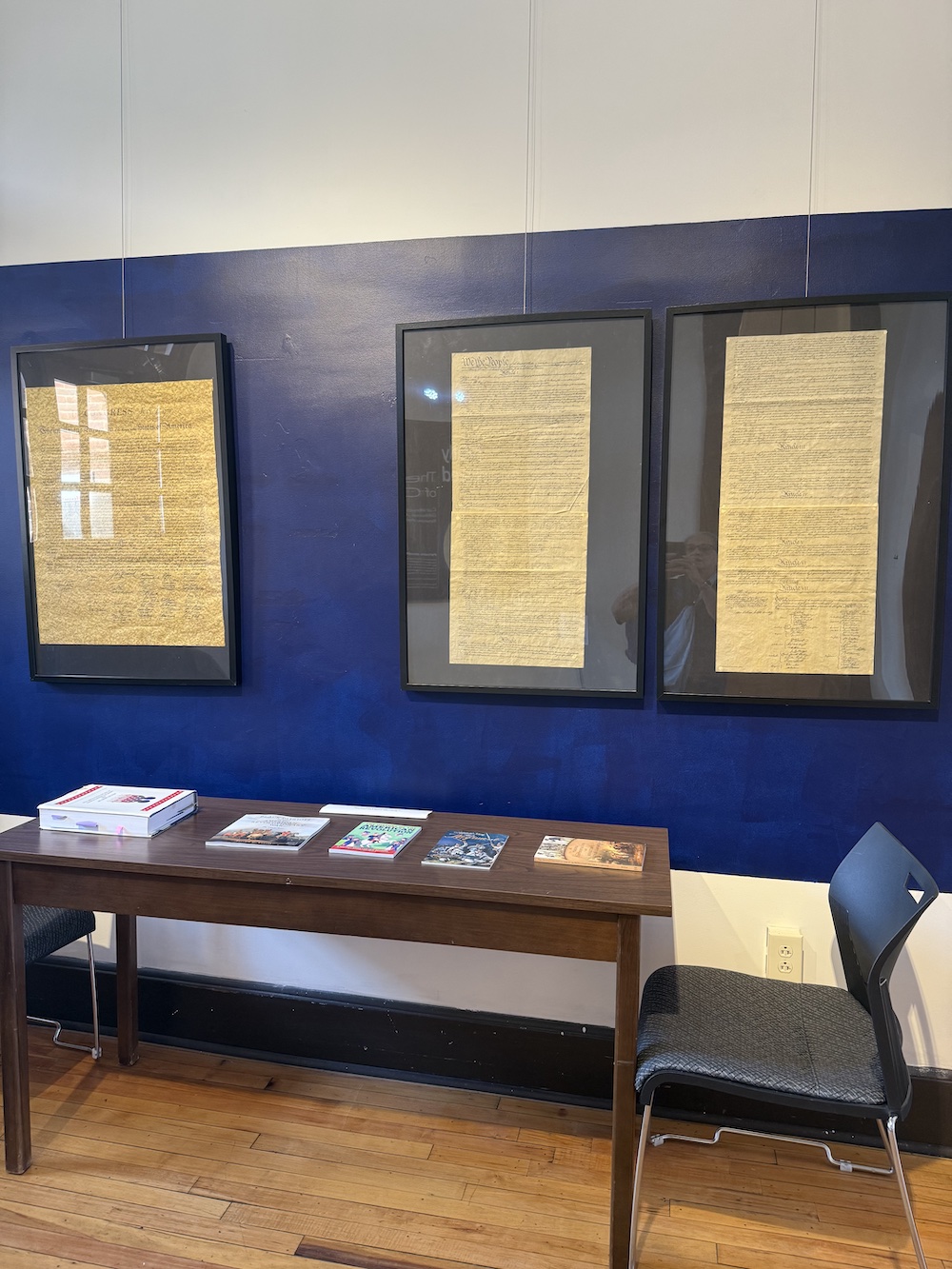
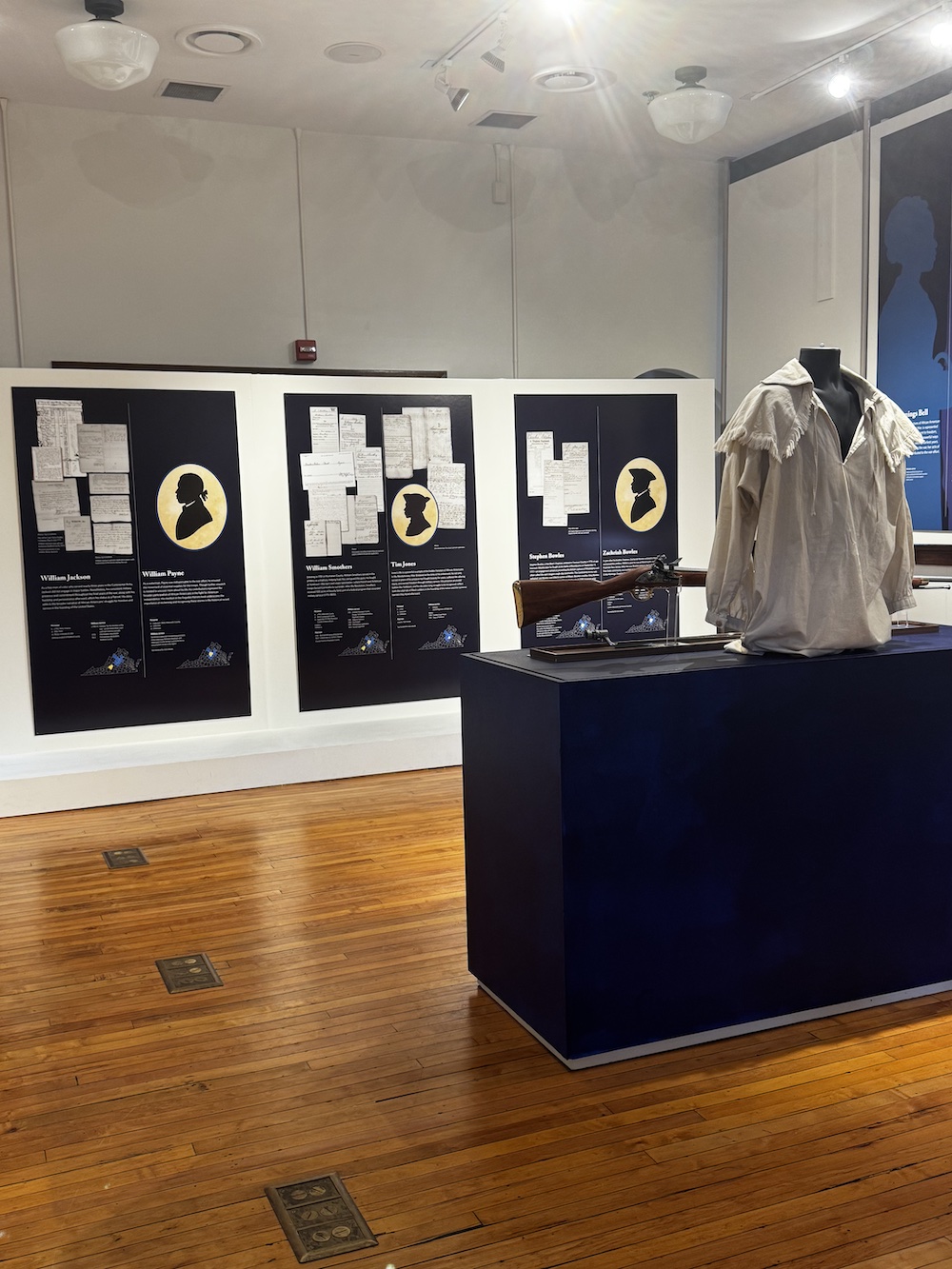
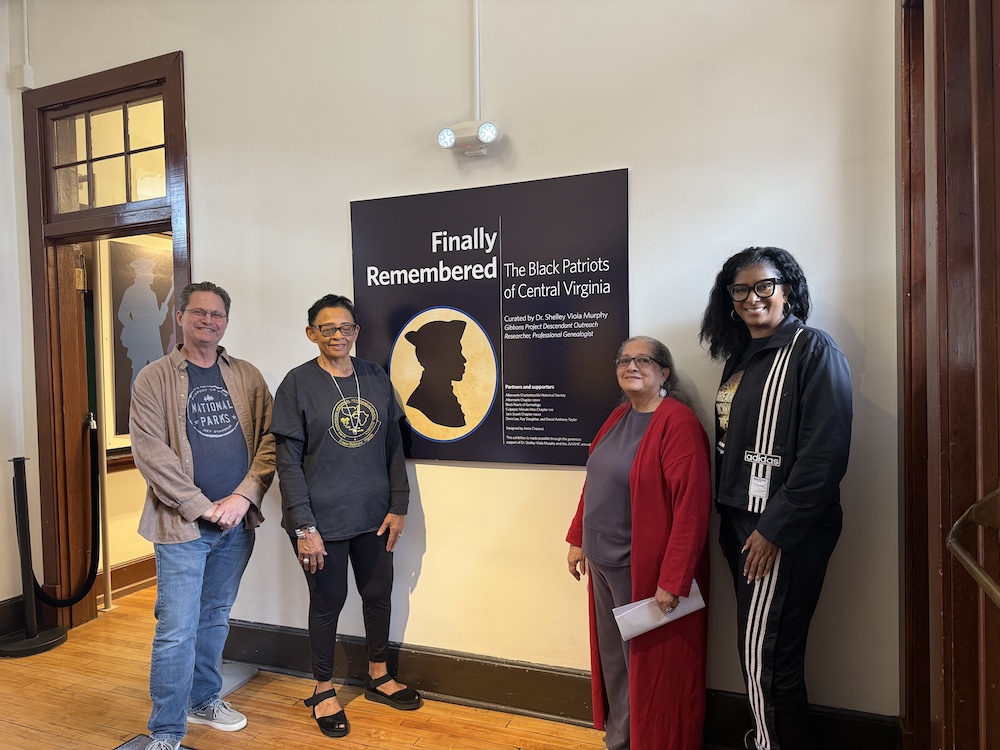
As the United States approaches its 250th anniversary in 2026, national and state-level America 250 commissions are shaping how the story of the nation’s founding will be told. Exhibits are being curated. I had my first one at the Jefferson School African American Heritage Center in Charlottesville (enjoy the photos). There are educational materials being written and presentations being made. Grants are being awarded and public narratives are being framed. For African Americans, please note this moment is not just ceremonial—it is consequential. As an African American genealogist who researches Black men and women participation in the Revolutionary War, and as a member of the Daughters of the American Revolution (DAR.org) and the Society of the First African Families of English America (SoFAFea.org), I understand something that many do not: our ancestors were not absent from the founding of this country. They were present—in uniform, in resistance, in petitions, in intelligence networks, and in the struggle for freedom that began long before 1776 was signed into parchment.
My question is to all is whether America 250 will reflect that truth?
“We Were There From the Beginning”
African Americans were active participants in the Revolutionary era, even as many were denied the full rights the Revolution promised.
You all have heard of Crispus Attucks, a man of African and Native descent, is widely recognized as the first person killed in the Boston Massacre in 1770—often called the first martyr of the American Revolution.
And James Armistead Lafayette, an enslaved man from Virginia, served as a double agent, providing critical intelligence that contributed to the American victory at Yorktown.
Also, Prince Hall, a free Black leader in Boston, petitioned for education and rights for African Americans during and after the Revolutionary era.
There are so many more….and some right from your hometown.
Most historians estimate that approximately 6,600 African American men served in Patriot forces, I believe we are up to almost 9,000. Others sided with the British after promises of emancipation, up to 20,000. Either way, Black Americans were not spectators in the fight for independence. They were actors within it.
America 250 must acknowledge that reality and be involved.
Here is a question “Why Should African Americans Pay Attention to America 250?” Here are my three points to consider:
1. Because Public Memory Is Being Shaped Right Now
Every state has its own America 250 commission. These bodies determine:
- What stories are told in public exhibits
- Which historical figures are elevated
- What language is used in educational materials
- Who receives grants and recognition
If African Americans are not engaged locally, state narratives may default to simplified versions of the Revolution—ones that emphasize liberty without acknowledging slavery, and unity without addressing contradiction. Public memory is not accidental. It is constructed.
2. Because Erasure Often Happens Quietly
Erasure does not always appear as deliberate exclusion. More often, it appears as omission.
- A Revolutionary War exhibit with no Black soldiers depicted.
- A reenactment without African American participants.
- A timeline that celebrates “freedom for all” while ignoring the fact that most African Americans were enslaved in 1776.
America often prefers its founding story to be inspirational rather than complicated. Nations tend to elevate heroism while softening injustice. The tension between liberty and slavery challenges a clean narrative. But avoiding difficult truths does not strengthen a nation—I think it weakens its moral foundation.
3. Because Our Ancestors Used Revolutionary Ideals to Demand Freedom
Even when the promises of 1776 were not extended to them, African Americans understood the power of its language. The Declaration’s assertion that “all men are created equal” became a rhetorical weapon for:
- Early Black petitioners in Northern states
- Abolitionists in the 19th century
- Civil Rights leaders in the 20th century
The Revolutionary era planted ideological seeds that African Americans would later use to challenge the nation to live up to its own founding principles.
I believe the Revolution is not separate from Black history. It is foundational to it.
What African Americans Should Know—and Care About
1. Military Service Was Real and Documented.
Black soldiers served in integrated regiments, particularly in the North. Their names appear in muster rolls, pension applications, and state archives—though sometimes obscured.
2. Intelligence and Logistics Were Critical Contributions.
Figures like James Armistead Lafayette demonstrate that Black participation extended beyond the battlefield.
3. Legal Precedents Emerged From Revolutionary Ideals.
In states like Massachusetts, Revolutionary principles were invoked in legal cases that effectively ended slavery in the 1780s.
These contributions were not symbolic. They were structural to American independence.
As genealogists and researchers know, uncovering Black Revolutionary history requires persistence. Here are points to help with the research:
- Enslaved men were often listed under the names of enslavers.
- Pension records sometimes omit racial identity.
- Local commemorations may focus on well-known white founders while ignoring Black patriots.
- Contemporary debates over how history is taught can influence which stories receive funding or visibility.
America does not always like to confront its “ugly” history. The coexistence of liberty and slavery complicates patriotic celebration. Yet honest history does not diminish the nation—it deepens it.
I am putting out “A Call to Action”
America 250 presents an opportunity—but only if all Americans especially African Americans engage intentionally.
Learn About Your State’s Commission. Every state has an America 250 initiative. Review its plans. Ask what Black Revolutionary narratives are included.
2. Research Your Lineage. Many African Americans discover Revolutionary connections—sometimes Black patriots, sometimes white ancestors whose stories intersect with theirs. Genealogical research can shift personal identity and public narrative.
3. Contribute Your Research. Submit documented findings to local historical societies. Offer to speak. Advocate for inclusive programming.
4. Engage With Lineage and Historical Organizations. Seek out organizations such as:
- Society of First African Families of English America (SOFAFEA.org), they just published a book on the Forgotten Patriots-Northern Theatre
- Daughters of the American Revolution (DAR.org), in 2008 they put out a book called the Forgotten Patriots, its available in pdf form and free and
- Sons of the American Revolution (SAR.org)
Each of these provide educational resources, research guidance, and opportunities to document Revolutionary ancestry—including African American patriots. These institutions have ongoing initiatives focused on identifying and honoring previously overlooked contributors.
5. Insist on Inclusion. Ask your local museums, historical societies and schools: Where are the Black men and women patriots? Where are the enslaved voices? Where are the freedom petitions? Independence from Great Britain is part of our story too-“claim it”!
Our ancestors’ relationship to independence was complex. Some fought believing liberty would expand to include them. Others sought freedom wherever it was promised. I think of Benjamin Quarles quote: “The Negro’s role in the Revolution can be best understood by realizing that his major loyalty was not to be a place nor to a people, but to a principle.” Quarles, Benjamin (1961)
Many lived within the contradiction of a nation declaring liberty while holding them in bondage. Yet they were present. They stood in Boston. They served in Virginia as well as numerous other states. They labored in supply chains, they provided aid and comfort. They gathered intelligence. They petitioned for rights. They believed in the possibility of a more just nation—even when that nation did not yet believe in them. As America marks 250 years, African Americans should not stand at the margins of this commemoration. We are not footnotes to the founding. We are part of it.
And if we do not help tell that story, it risks being told without us.
 Family Tree Girl
Leave a comment